
Policy Reference: NIS-POL-001
Nature in Spirit Travel is committed to operating responsibly by protecting the environment, supporting local communities, respecting cultural heritage, promoting fair employment practices, and delivering authentic, responsible travel experiences. This policy applies to all employees, guides, suppliers, contractors and business partners.
Environmental Sustainability:
Nature In Spirit Travel is committed to minimising the environmental impact of our operations while protecting Tanzania’s unique ecosystems, wildlife, and natural resources. We integrate environmentally responsible practices throughout our business and encourage our employees, suppliers, and travellers to do the same.
Our environmental commitments include:
- Waste Reduction: We minimise waste generation by reducing unnecessary packaging, encouraging digital documentation instead of printed materials, separating recyclable waste where facilities exist, and promoting the responsible disposal of waste during safaris. Guests are encouraged to leave no trace in protected areas and to dispose of waste responsibly.
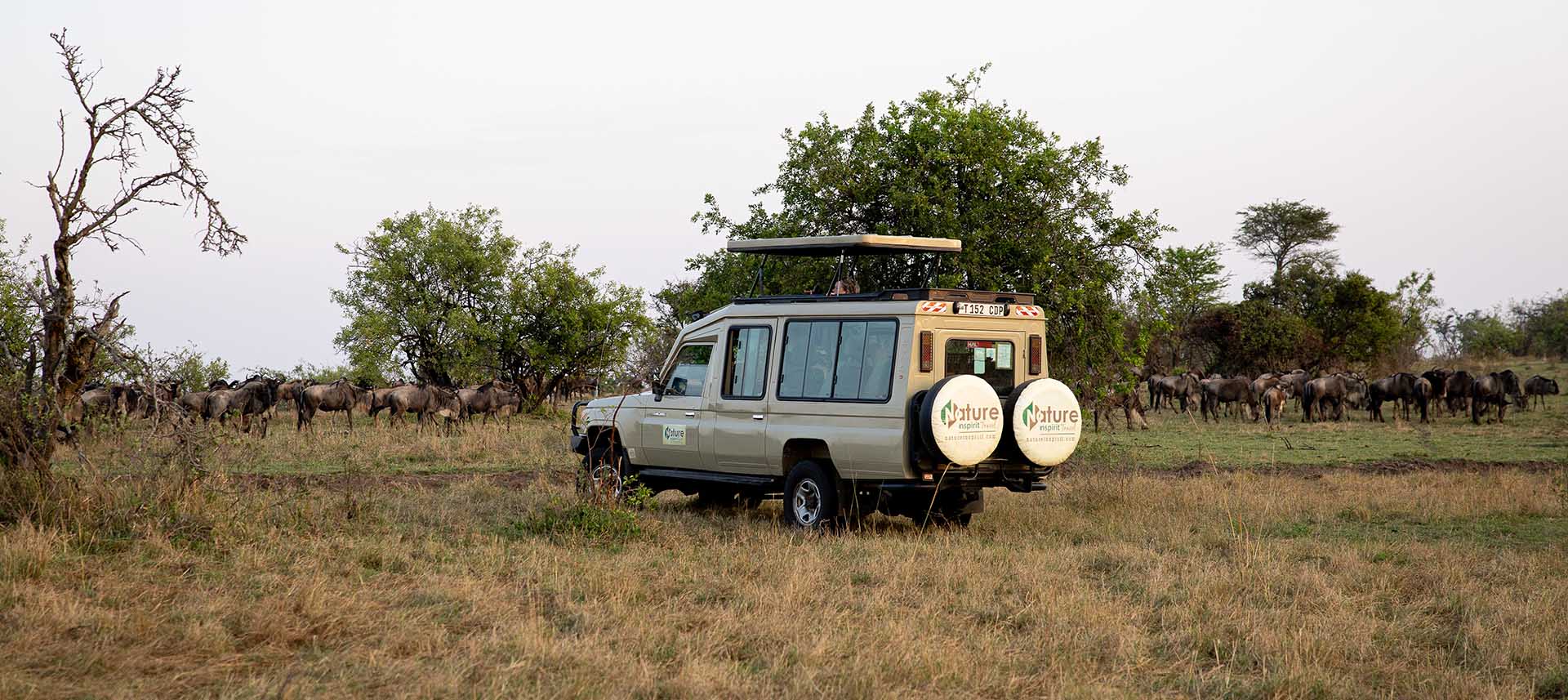
- Reducing Single-Use Plastics: We actively discourage the use of single-use plastics throughout our operations. Guests are provided with reusable drinking water containers where possible, and our safari vehicles carry refillable water dispensers instead of disposable plastic bottles. We also work with accommodation partners that have eliminated or significantly reduced single-use plastic products.
- Responsible Water Use: Water is a precious resource, particularly in many safari destinations. We partner with lodges and camps that have water conservation measures such as low-flow showers and taps, rainwater harvesting systems, water-efficient laundry practices, and guest awareness programmes encouraging responsible water use.
- Energy Efficiency and Renewable Energy: We prioritise working with accommodation providers that utilise renewable energy sources such as solar power for electricity and water heating. Many of our preferred lodges have invested in solar energy systems, energy-efficient lighting, and other technologies that reduce greenhouse gas emissions and dependence on fossil fuels.
- Wildlife and Habitat Conservation: We operate all safaris in accordance with national park regulations and responsible wildlife viewing guidelines. Our guides maintain appropriate viewing distances, avoid disturbing wildlife, remain on designated roads, and educate guests about protecting biodiversity and respecting natural habitats.
- Supporting Conservation Initiatives: We actively support conservation through responsible tourism and by partnering with suppliers that contribute to wildlife protection, habitat restoration, and anti-poaching efforts. We also encourage travellers to contribute positively to conservation through responsible travel choices.
- Sustainable Procurement: We give preference to suppliers and accommodation partners that demonstrate strong environmental practices, including renewable energy use, waste management, water conservation, sustainable sourcing, and recognised sustainability certifications or continuous improvement programmes.
- Staff and Guest Environmental Awareness: Our employees receive training on environmental best practices, while guests are provided with guidance before and during their safari on responsible behaviour, waste management, water conservation, respecting wildlife, and reducing their environmental footprint.
- Continuous Improvement: Nature In Spirit Travel regularly reviews its environmental performance, monitors the sustainability practices of its suppliers, and seeks opportunities to further reduce its environmental impact through innovation, collaboration, and adherence to internationally recognised sustainability standards such as Travelife.
Support for Local Communities:
Nature In Spirit Travel believes that tourism should create lasting social and economic benefits for the communities that make Tanzania such a unique destination. We are committed to ensuring that local people actively participate in and benefit from tourism through employment, local sourcing, cultural preservation, and community development initiatives.
Our commitments include:
- Prioritising Local Employment: We recruit employees, safari guides, drivers, office staff, and support personnel from local communities whenever possible. We invest in continuous professional development through regular training in wildlife interpretation, customer service, safety, first aid, and sustainable tourism practices, creating long-term employment opportunities and career growth.
- Purchasing Local Itinerarys and Services: We prioritise purchasing goods and services from local businesses, including fresh produce from local farmers, handcrafted souvenirs from community artisans, locally made safari equipment where available, transportation services, and accommodation owned or operated by Tanzanians. This helps strengthen local businesses and keeps tourism revenue within the local economy.
- Supporting Community-Based Tourism: We include authentic cultural experiences that directly benefit local communities, such as guided visits to Maasai villages, interactions with the Hadzabe and Datoga communities near Lake Eyasi, coffee experiences in Materuni Village, and locally guided nature walks. These experiences are organised respectfully and ensure that local communities receive direct economic benefits while preserving their traditions and culture.
- Supporting Local Conservation and Community Projects: Through tourism, we contribute to initiatives that improve community well-being and environmental sustainability. For example, Nature In Spirit Travel supports the distribution of locally manufactured ceramic water filters to rural communities, improving access to safe drinking water while supporting a local social enterprise in Arusha. This initiative demonstrates how tourism can create positive health, environmental, and economic impacts.
- Promoting Local Entrepreneurship: We encourage our guests to purchase authentic locally produced handicrafts, artwork, textiles, and cultural products directly from community groups, women’s cooperatives, and small businesses rather than imported souvenirs. This provides additional income opportunities for local families.
- Fair and Responsible Business Practices: We work with suppliers and partners that provide fair wages, safe working conditions, equal employment opportunities, and respect for workers’ rights. Long-term relationships are built with local suppliers who share our commitment to responsible tourism.
- Cultural Heritage Preservation: Our guides educate travellers about Tanzania’s diverse cultures, customs, and traditions, encouraging respectful interactions with local communities. We promote experiences that preserve cultural heritage while ensuring that community participation is voluntary, respectful, and economically beneficial.
- Building Long-Term Partnerships: We believe sustainable tourism is built through collaboration. We maintain long-term relationships with local communities, conservation organisations, accommodation providers, and community enterprises to maximise the positive impact of tourism and ensure benefits continue for future generations.
Cultural Respect:
Nature In Spirit Travel is committed to protecting and celebrating Tanzania’s rich cultural heritage by promoting respectful, meaningful, and authentic interactions between our guests and local communities. We believe that cultural tourism should foster mutual understanding, preserve traditional knowledge, and generate direct benefits for local people while respecting their values, customs, and way of life.
Our commitments include:
- Guest Cultural Briefings: Before and during every journey, our guides provide guests with information about local customs, traditions, etiquette, appropriate dress, photography protocols, and respectful behaviour when visiting villages, cultural sites, and sacred places.
- Respectful Community Visits: We organise cultural experiences with communities such as the Maasai, Hadzabe, and Datoga only with the participation and consent of the local community. These visits are designed to promote genuine cultural exchange rather than staged performances, ensuring that community members benefit directly from tourism.
- Photography Etiquette: Guests are encouraged to ask for permission before taking photographs of individuals, homes, ceremonies, or cultural activities. Our guides explain local customs regarding photography and ensure that visitors respect personal privacy and cultural sensitivities.
- Supporting Local Cultural Heritage: We encourage guests to purchase authentic handicrafts, beadwork, textiles, carvings, and artwork directly from local artisans and community cooperatives. This helps preserve traditional craftsmanship while providing income for local families.
- Respect for Heritage Sites: During visits to historical and cultural attractions such as Stone Town in Zanzibar, Olduvai Gorge, and other heritage sites, guests are encouraged to respect local regulations, avoid damaging historical structures, dispose of waste responsibly, and help preserve these important cultural landmarks for future generations.
- Appropriate Behaviour: Our guides advise guests on appropriate clothing when visiting villages, schools, places of worship, and culturally significant sites. Visitors are encouraged to behave respectfully, avoid offensive language or behaviour, and show appreciation for local customs and traditions.
- Interpretation and Education: Our professional guides provide historical and cultural interpretation throughout the journey, helping guests understand the significance of Tanzania’s diverse ethnic groups, languages, traditions, music, cuisine, and history. This enriches the travel experience while promoting greater cross-cultural understanding.
Examples
- Before visiting a Maasai village, guests receive a briefing on Maasai traditions, greetings, photography etiquette, and appropriate behaviour to ensure respectful and meaningful interactions.
- During visits to Stone Town, guides explain the town’s multicultural history, UNESCO World Heritage significance, and the importance of respecting religious sites by dressing modestly and following local customs.
- Guests are encouraged to purchase handcrafted souvenirs directly from local artisans rather than imported products, ensuring tourism revenue benefits the local community.
- Throughout the safari, guides encourage respectful conversations with local people, helping guests appreciate Tanzania’s cultural diversity while avoiding stereotypes and ensuring interactions are conducted with dignity and respect.
Employment Welfare and Human Rights:
Nature In Spirit Travel is committed to creating a fair, safe, inclusive, and respectful workplace where every employee is treated with dignity and has equal opportunities to develop professionally. We fully support internationally recognised human rights principles and comply with the labour laws of the United Republic of Tanzania. We maintain zero tolerance for child labour, forced labour, discrimination, harassment, abuse, or any form of exploitation throughout our operations and supply chain.
Our commitments include:
- Fair Employment Practices: We provide employees with clear employment contracts, fair wages, legal working hours, and statutory benefits in accordance with Tanzanian labour legislation. Employees receive timely payment and are treated fairly regardless of their position within the company.
- Equal Opportunities: Recruitment, promotion, training, and career development are based on qualifications, experience, skills, and performance. We provide equal employment opportunities regardless of gender, age, ethnicity, religion, disability, or other personal characteristics.
- Safe and Healthy Working Environment: The safety and wellbeing of our employees are a priority. Staff receive appropriate safety training, access to suitable equipment, and guidance on emergency procedures. Safari guides and drivers receive regular training in defensive driving, wildlife safety, first aid, customer care, and responsible tourism practices.
- Professional Development: We invest in our employees through ongoing training in wildlife interpretation, hospitality, sustainability, leadership, communication, and customer service. Continuous learning helps improve service quality while supporting long-term career growth.
- Respect for Human Rights: Nature In Spirit Travel respects the human rights of all employees, guests, suppliers, and community members. Every individual has the right to work in an environment free from intimidation, discrimination, harassment, bullying, or abuse.
- Zero Tolerance for Child Labour and Forced Labour: We do not employ anyone below the legal minimum working age and strictly prohibit forced labour, bonded labour, human trafficking, or any other form of exploitation. We also expect our suppliers and business partners to uphold the same standards.
- Prevention of Harassment and Discrimination: We maintain a workplace where all employees are treated with respect. Any form of harassment, sexual harassment, bullying, discrimination, or retaliation is strictly prohibited and addressed promptly through appropriate internal procedures.
- Responsible Supply Chain: We encourage our accommodation partners, transport providers, and other suppliers to adopt fair labour practices, provide safe working conditions, respect human rights, and comply with all applicable labour laws.
Examples
- Local Employment: Nature In Spirit Travel prioritises hiring qualified Tanzanian staff, including safari guides, drivers, office personnel, and operational support staff, contributing to local employment and economic development.
- Training and Career Development: Employees participate in regular training programmes covering wildlife knowledge, hospitality, sustainability, customer service, health and safety, and first aid, enabling them to develop professionally and deliver exceptional guest experiences.
- Safe Working Conditions: Safari vehicles are regularly maintained, guides receive safety briefings before each safari, and employees have access to appropriate communication equipment and emergency support while on duty.
- Equal Opportunity: Both women and men are encouraged to apply for positions across the company, and recruitment decisions are made solely on merit and competence.
- Supplier Expectations: When selecting accommodation providers and other partners, Nature In Spirit Travel gives preference to businesses that demonstrate fair employment practices, safe working conditions, and respect for workers’ rights.
- Respectful Workplace: Employees are encouraged to raise concerns confidentially without fear of retaliation, fostering a workplace culture based on trust, respect, and accountability.
Responsible Travel Experience:
Nature In Spirit Travel is committed to delivering travel experiences that inspire guests to become responsible and environmentally conscious travellers. We believe that tourism should contribute positively to wildlife conservation, environmental protection, cultural preservation, and the well-being of local communities. Throughout every journey, our guests are guided on how to travel responsibly and minimise their impact while maximising the positive benefits of tourism.
Our commitments include:
- Responsible Wildlife Viewing: Our professional guides educate guests on ethical wildlife viewing practices, including maintaining a safe distance from animals, keeping noise levels low, avoiding feeding or disturbing wildlife, remaining on designated roads, and respecting all national park regulations. This helps protect animal welfare and preserves natural behaviour.
- Environmental Awareness: Guests are encouraged to minimise their environmental footprint by reducing waste, avoiding littering, using reusable water bottles where possible, conserving water and electricity at lodges, and respecting Tanzania’s protected areas and fragile ecosystems.
- Reducing Plastic Waste: During safaris, guests are encouraged to refill reusable water bottles from the vehicle’s water supply rather than purchasing disposable plastic bottles. We also encourage guests to avoid unnecessary plastic packaging and dispose of waste responsibly.
- Respect for Local Cultures: Before visiting local communities, villages, or cultural heritage sites, our guides provide information on local customs, traditions, appropriate dress, greetings, photography etiquette, and respectful behaviour. Guests are encouraged to engage with local people in a way that promotes dignity, understanding, and mutual respect.
- Supporting Local Communities: We encourage guests to support local businesses by purchasing authentic handmade products directly from local artisans, dining at locally owned establishments where appropriate, and participating in community-based tourism experiences that provide direct economic benefits to local people.
- Conservation Education: Throughout the safari, our guides share knowledge about Tanzania’s wildlife, ecosystems, conservation challenges, and ongoing efforts to protect endangered species and habitats. Guests gain a deeper understanding of the importance of biodiversity conservation and responsible tourism.
- Respecting Protected Areas: Guests are reminded to leave natural areas exactly as they found them by not collecting plants, rocks, feathers, or other natural objects and by ensuring all waste is removed from national parks and conservation areas.
- Continuous Guest Engagement: Responsible travel messages are shared before departure, during safari briefings, and throughout the journey so that sustainable practices become part of the overall travel experience.
Examples
- Wildlife Conservation: Before entering Serengeti National Park or the Ngorongoro Conservation Area, guides explain why vehicles must remain on designated tracks, why animals should never be approached too closely, and why feeding wildlife is strictly prohibited.
- Environmental Protection: During game drives, guides ensure that all rubbish is collected and removed from the parks, reinforcing the principle of leaving no trace.
- Responsible Water Use: Guests staying at safari camps are encouraged to use water responsibly by taking shorter showers and reusing towels where accommodation policies allow, recognising that many camps operate in water-scarce environments.
- Cultural Respect: Before visiting a Maasai village or the Hadzabe community, guests receive guidance on respectful greetings, asking permission before taking photographs, appropriate dress, and cultural etiquette to ensure meaningful and respectful interactions.
- Supporting Local Livelihoods: Guests are encouraged to purchase handcrafted beadwork, wood carvings, textiles, and other locally made products directly from community artisans, helping preserve traditional craftsmanship while supporting local families.
- Conservation Through Community Support: Nature In Spirit Travel introduces guests to its safe drinking water initiative, where locally manufactured ceramic water filters are distributed to rural communities. This demonstrates how tourism can contribute directly to improving community health while supporting a local social enterprise.
- Learning Through Interpretation: Throughout the safari, guides explain animal behaviour, migration patterns, ecosystem relationships, and conservation challenges, helping guests appreciate not only what they see but also why protecting Tanzania’s natural heritage is essential.
Partners and Suppliers Standards:
Nature In Spirit Travel recognises that achieving sustainability requires close collaboration with our partners and suppliers. We are committed to working with accommodation providers, transport companies, activity operators, conservation organisations, and local businesses that demonstrate responsible environmental, social, and ethical business practices. Through our supplier selection and review process, we encourage continual improvement in sustainability performance across our entire supply chain.
Our commitments include:
- Selecting Responsible Partners: We give preference to suppliers that comply with national laws and demonstrate responsible environmental management, fair employment practices, ethical business conduct, and respect for local communities and wildlife.
- Environmental Performance: We prioritise accommodation partners that have implemented sustainable initiatives such as:
- Solar power generation and renewable energy systems.
- Water conservation measures, including rainwater harvesting and water-efficient fixtures.
- Waste separation, recycling, and composting programmes.
- Reduction or elimination of single-use plastics.
- Environmentally friendly wastewater treatment systems.
- Wildlife and Conservation Commitment: We work with partners that actively contribute to wildlife conservation by protecting natural habitats, supporting anti-poaching initiatives, following responsible wildlife viewing guidelines, and complying with the regulations of Tanzania’s protected areas.
- Social Responsibility: We encourage suppliers to employ local people, provide fair wages and safe working conditions, invest in employee training, and support nearby communities through local sourcing, education, healthcare, or conservation projects.
- Ethical Business Practices: Our suppliers are expected to uphold high standards of integrity, transparency, legal compliance, and respect for human rights. Nature In Spirit Travel does not knowingly work with businesses that engage in child labour, forced labour, discrimination, corruption, or unethical business practices.
- Supporting Local Businesses: Wherever possible, we prioritise locally owned accommodation, transport providers, restaurants, artisans, and community enterprises, helping tourism generate direct economic benefits for Tanzanian communities.
- Continuous Improvement: Sustainability is discussed during supplier meetings, site visits, and routine business reviews. We encourage suppliers to strengthen their sustainability performance by sharing best practices, promoting internationally recognised standards such as Travelife, and identifying opportunities for continual improvement.
Examples
- Renewable Energy: We partner with accommodation providers such as A&K Sanctuary Properties, which have invested in solar power systems, responsible water management, waste reduction programmes, and wildlife conservation initiatives. These practices align with our commitment to reducing the environmental footprint of tourism.
- Plastic Reduction: We give preference to lodges and camps that provide refillable drinking water stations instead of disposable plastic bottles and encourage guests to use reusable water bottles during their safari.
- Community Employment: We work with accommodation providers that prioritise recruiting staff from neighbouring communities and purchase food, fresh produce, and services from local suppliers whenever possible.
- Responsible Wildlife Experiences: We select safari camps and activity providers that strictly follow park regulations, maintain ethical wildlife viewing practices, and actively educate guests about conservation.
- Community Partnerships: We collaborate with local cultural tourism enterprises, Maasai communities, and local artisans whose activities provide direct economic benefits while preserving Tanzania’s cultural heritage.
- Supplier Monitoring: Before adding a new supplier, Nature In Spirit Travel reviews factors such as environmental practices, service quality, legal compliance, safety standards, and community engagement. Existing suppliers are periodically reviewed using guest feedback, operational visits, and ongoing communication to encourage continuous improvement.
Monitoring and Continuous Improvement
Nature In Spirit Travel is committed to continually improving its sustainability performance through regular monitoring, evaluation, and stakeholder engagement. We recognise that sustainability is an ongoing process, and we actively measure our environmental, social, and economic impacts to identify opportunities for improvement. The results of these reviews are used to set annual objectives, update policies, strengthen operational practices, and enhance the overall sustainability of our business.
Our commitments include:
- Internal Sustainability Reviews: We conduct periodic internal reviews of our sustainability policies, operational procedures, and compliance with the Travelife Sustainability Standard. These reviews help us measure progress against our sustainability objectives and identify areas requiring improvement.
- Staff Feedback and Engagement: Employees are encouraged to share ideas and recommendations for improving sustainability in the workplace and during safari operations. Regular staff meetings and training sessions provide opportunities to discuss environmental performance, customer feedback, workplace safety, and responsible tourism practices.
- Customer Feedback: Guest feedback is collected after each trip through questionnaires, online reviews, and direct communication. We specifically encourage feedback on environmental practices, wildlife guiding standards, accommodation sustainability, cultural experiences, and service quality. This information helps us improve future itineraries and operational procedures.
- Supplier Evaluations: We regularly review the sustainability performance of our accommodation partners, transport providers, and activity operators. Assessments consider factors such as environmental management, renewable energy use, waste reduction, water conservation, employment practices, guest satisfaction, and commitment to continuous improvement.
- Monitoring Environmental Performance: We monitor our efforts to reduce waste, minimise single-use plastics, encourage responsible water and energy use, and promote environmentally responsible travel among our guests and staff. Where possible, we track progress and identify opportunities for further improvements.
- Review of Community Impact: We periodically evaluate how our tourism activities benefit local communities through employment, local purchasing, community-based tourism experiences, and support for social initiatives such as safe drinking water projects and local conservation efforts.
- Annual Sustainability Action Plan: Based on the results of internal reviews, customer feedback, staff suggestions, and supplier evaluations, Nature In Spirit Travel develops an annual sustainability improvement plan with measurable objectives and responsibilities. Progress is reviewed regularly to ensure continual improvement.
Examples
- Annual Travelife Review: Each year, Nature In Spirit Travel reviews its compliance with the Travelife Sustainability Standard, updates policies where necessary, and implements new actions to improve sustainability performance.
- Customer Feedback: If guests recommend reducing plastic use during safaris, we may introduce additional refillable water stations, encourage reusable water bottles, or work with suppliers to further reduce disposable packaging.
- Supplier Improvement: During annual supplier reviews, we encourage accommodation partners to adopt additional sustainability measures, such as installing solar energy systems, improving recycling programmes, reducing food waste, or eliminating remaining single-use plastics.
- Staff Suggestions: Guides and operational staff may identify opportunities to improve safari logistics, reduce fuel consumption through more efficient route planning, or enhance guest education on responsible wildlife viewing.
- Community Initiatives: Following annual reviews, the company may expand support for locally manufactured ceramic water filters, strengthen partnerships with community tourism enterprises, or increase procurement from local suppliers.
- Training Improvements: Feedback from staff and guests may result in additional training on sustainability, customer service, wildlife conservation, first aid, or cultural interpretation to continually improve the quality of the guest experience.
- Monitoring Key Indicators: Nature In Spirit Travel tracks indicators such as guest satisfaction, staff training completed, supplier sustainability assessments, community partnerships, renewable energy use by preferred accommodation partners, and progress toward reducing waste and plastic consumption.
Compliance:
Nature In Spirit Travel is committed to operating with integrity, transparency, and accountability by complying with all applicable national laws, regulations, and internationally recognised sustainability standards. We continually review and improve our management practices to ensure legal compliance, responsible business conduct, and the highest standards of environmental, social, and economic sustainability.
Our commitments include:
- Legal Compliance: We comply with all relevant laws and regulations of the United Republic of Tanzania governing tourism, employment, taxation, health and safety, environmental protection, transport, and wildlife conservation. We ensure that all required business licences, permits, registrations, and insurance policies are maintained and kept up to date.
- Protected Area Regulations: All safaris are conducted in accordance with the rules and regulations established by the relevant authorities responsible for Tanzania’s national parks and conservation areas. Our guides and guests are required to follow park regulations designed to protect wildlife, habitats, and visitor safety.
- Labour and Human Rights Compliance: We comply with Tanzanian labour legislation by providing fair employment conditions, lawful contracts, safe working environments, equal employment opportunities, and respect for internationally recognised human rights. We maintain zero tolerance for child labour, forced labour, discrimination, or harassment.
- Environmental Compliance: We operate in accordance with environmental legislation and encourage environmentally responsible practices throughout our operations, including responsible waste management, efficient use of water and energy, and support for wildlife conservation.
- Health and Safety: We maintain procedures to protect the health and safety of our employees, guests, and suppliers. Safari vehicles are regularly inspected and maintained, and our guides receive training in first aid, emergency response, defensive driving, and responsible wildlife guiding.
- Business Ethics and Transparency: Nature In Spirit Travel conducts its business honestly and ethically. We are committed to transparent communication with guests, suppliers, employees, and partners, ensuring accurate information, fair pricing, and responsible marketing.
- Compliance Throughout the Supply Chain: We encourage our accommodation providers, transport companies, and activity partners to comply with all applicable legal requirements and to adopt recognised sustainability and ethical business practices.
- Continuous Improvement: Compliance is regularly reviewed through internal monitoring, staff training, supplier evaluations, customer feedback, and periodic policy reviews. Where improvements are identified, corrective actions are implemented as part of our annual sustainability action plan.
Examples
- Business Licensing: Nature In Spirit Travel maintains all required tourism licences, company registrations, insurance policies, and tax compliance documentation required to operate legally in Tanzania.
- Protected Areas: During safaris in Serengeti National Park, Tarangire National Park, and the Ngorongoro Conservation Area, our guides strictly follow park speed limits, remain on designated roads, respect wildlife viewing regulations, and ensure guests comply with all conservation rules.
- Employment Compliance: All employees receive formal employment agreements, fair remuneration, statutory benefits, and work in accordance with Tanzanian labour laws. Staff also receive ongoing training in safety, sustainability, customer service, and professional development.
- Supplier Standards: Before working with accommodation providers, Nature In Spirit Travel verifies that they operate legally and encourages them to implement sustainable practices such as renewable energy, responsible waste management, fair employment, and community engagement.
- Travelife Commitment: Nature In Spirit Travel has completed a baseline assessment against the Travelife Sustainability Standard and is committed to implementing the recommendations, monitoring progress, and continuously improving its sustainability management system.
- Ethical Business Practices: The company ensures that all quotations, itineraries, pricing, and marketing materials accurately represent the services offered, providing clients with clear and transparent information before booking.
Communication:
Nature In Spirit Travel is committed to ensuring that its Sustainability Policy is clearly communicated, understood, and implemented by all employees, suppliers, business partners, and clients. We believe that effective communication is essential for building a culture of sustainability and ensuring that everyone involved in our operations contributes to responsible tourism. The policy is reviewed periodically and updated whenever necessary to reflect changes in legislation, industry best practices, and our sustainability objectives.
Our commitments include:
- Employee Communication and Training: All employees receive a copy of the Sustainability Policy during their induction and are introduced to the company’s sustainability commitments. Regular training sessions and staff meetings are used to reinforce topics such as responsible tourism, environmental protection, wildlife conservation, health and safety, human rights, customer service, and ethical business practices.
- Supplier and Partner Engagement: We share our sustainability expectations with accommodation providers, transport companies, guides, activity operators, and other suppliers. We encourage them to adopt responsible environmental, social, and ethical practices and work collaboratively to improve sustainability throughout the tourism supply chain.
- Guest Communication: Our guests are informed about responsible travel practices before and during their journey. Sustainability messages are communicated through pre-departure information, itinerary documents, welcome briefings, safari guide presentations, and direct interaction with our guides throughout the trip.
- Company Documentation: The Sustainability Policy is incorporated into relevant company documents, including employee manuals, supplier guidelines, operational procedures, and sustainability reports. This ensures consistency in the implementation of our sustainability commitments across all areas of the business.
- Digital Communication: The policy and our sustainability initiatives are communicated through our website, social media platforms, newsletters, email communications, and promotional materials. These channels are also used to highlight conservation initiatives, community projects, responsible travel tips, and sustainability achievements.
- Continuous Review: The Sustainability Policy is reviewed at least annually, or whenever significant changes occur in legislation, business operations, or recognised sustainability standards such as Travelife. Feedback from employees, guests, suppliers, and partners is considered when updating the policy to ensure it remains relevant and effective.
Examples
- Staff Induction: Every new employee receives an introduction to Nature In Spirit Travel’s Sustainability Policy, including guidance on responsible wildlife viewing, waste reduction, customer care, workplace safety, and cultural respect.
- Guide Briefings: Safari guides receive periodic refresher training on wildlife conservation, responsible tourism, cultural sensitivity, and environmental protection so they can consistently communicate these messages to guests.
- Supplier Meetings: During meetings with accommodation providers and other partners, Nature In Spirit Travel discusses sustainability expectations, such as reducing single-use plastics, improving energy efficiency through solar power, supporting local employment, and strengthening community engagement.
- Guest Information: Before visiting a Maasai village, Stone Town, or a national park, guests receive guidance on respectful behaviour, photography etiquette, wildlife conservation rules, and environmental responsibility.
- Website and Marketing: The company’s website includes information about its sustainability commitments, conservation initiatives, support for local communities, and responsible travel philosophy, helping prospective travellers understand Nature In Spirit Travel’s values before booking.
- Annual Policy Review: Each year, management reviews the Sustainability Policy alongside Travelife requirements, guest feedback, staff recommendations, and supplier evaluations. Where improvements are identified, the policy is updated and communicated to employees and key stakeholders.
Sustainability concerns or ideas?
We believe sustainability works best when people speak up.
If you have a concern, suggestion, question, or would like to report something related to our environmental, social, cultural, employment, or responsible-travel practices, we would like to hear from you.